The body of a steel valve is either cast or forged, and the choice shapes its size range, strength, cost and delivery. Buyers often hear that forged valves are “stronger” and cast valves are “cheaper”. There is some truth in both statements, but the real picture is more useful: each process suits a certain range of sizes and shapes.
This article explains how each body is made, what the differences mean in practice and how to decide between them for a given line.
How casting and forging differ
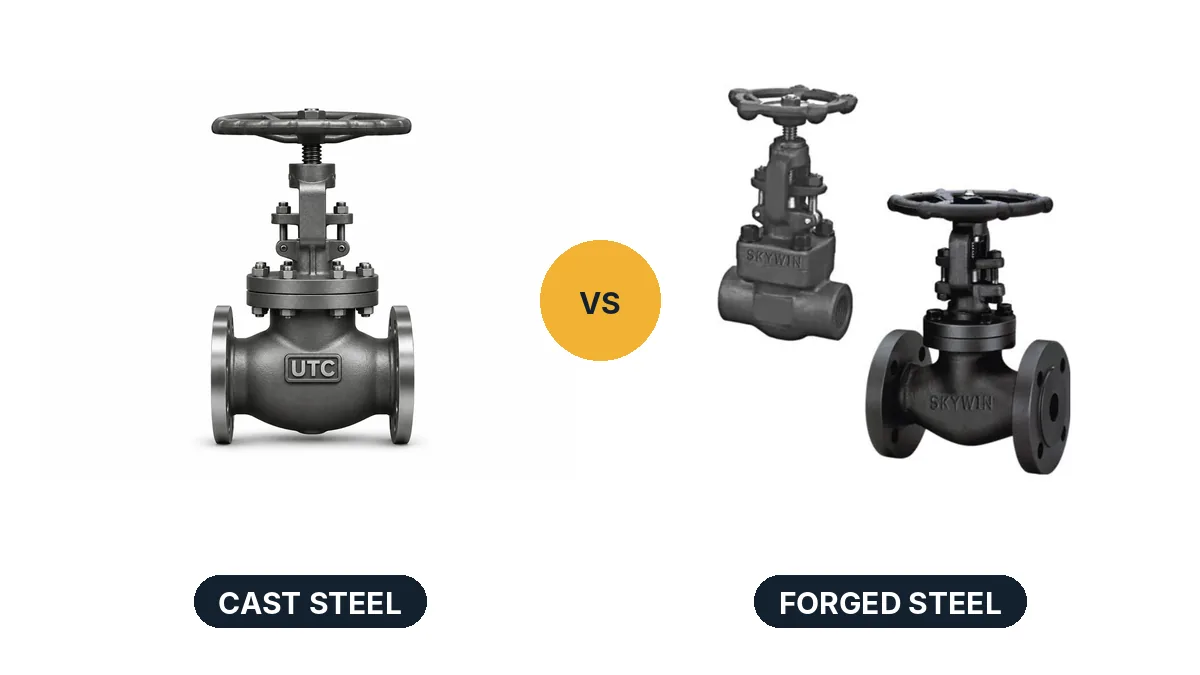
In casting, molten steel is poured into a mould that has the shape of the valve body. The metal solidifies, the mould is removed and the casting is heat treated and machined. Casting can produce complex internal shapes, such as the flow passages of a globe valve or the large body of a gate valve, in one piece. However, the cast structure can contain porosity, shrinkage or inclusions, which is why castings for higher classes and critical services are usually inspected by radiography or other non-destructive methods.
In forging, a heated billet is shaped under compressive force, usually in dies. The process refines the grain structure and aligns it with the shape of the part, which generally gives higher strength and toughness and fewer internal defects. Forging works best for compact shapes. Complex or very large bodies are difficult to forge economically.
Material grades
| Service | Forged grade (typical) | Cast grade (typical) |
|---|---|---|
| Carbon steel | ASTM A105 | ASTM A216 WCB |
| Low-temperature carbon steel | ASTM A350 LF2 | ASTM A352 LCB / LCC |
| Chrome-moly alloy | ASTM A182 F11 / F22 | ASTM A217 WC6 / WC9 |
| Stainless steel | ASTM A182 F304 / F316 | ASTM A351 CF8 / CF8M |
The forged and cast grades are chemically similar but not identical, and each follows its own specification. Pressure–temperature ratings in ASME B16.34 place the common carbon steel grades in the same material group, so a Class 300 forged carbon steel valve and a Class 300 cast carbon steel valve have similar pressure–temperature ratings at the same temperature.
Side-by-side comparison
| Parameter | Forged steel valves | Cast steel valves |
|---|---|---|
| Typical size range | Small, commonly NPS 4 and below | Medium to very large, commonly NPS 2 and above |
| Typical end connections | Socket-weld, threaded, flanged, butt-weld | Flanged, butt-weld |
| Typical pressure classes | 150 to 1500, with Class 800 common | 150 to 2500 and above |
| Body shape | Compact, simple | Complex shapes possible |
| Internal defects | Low risk | Higher risk; inspection often required |
| Cost | Often higher for the same size, but compact | Often lower in larger sizes |
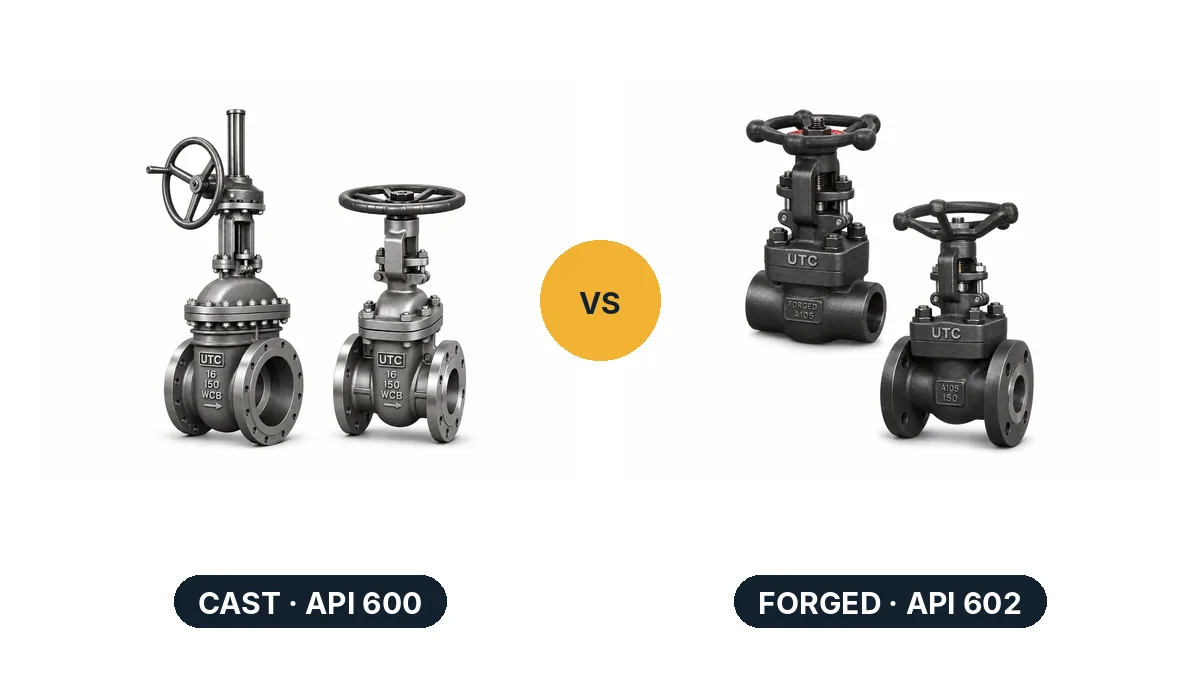
| Common standards | API 602, BS 5352, ASME B16.11 ends | API 600, API 623, BS 1873, BS 1868 |
When forged valves are the better choice
- Small-bore lines such as instrument, sampling, drain and vent connections
- High-pressure, small-diameter process lines
- Services where a compact, rugged body is useful
- Lines with socket-weld or threaded connections
- Applications where the specification calls for forged construction
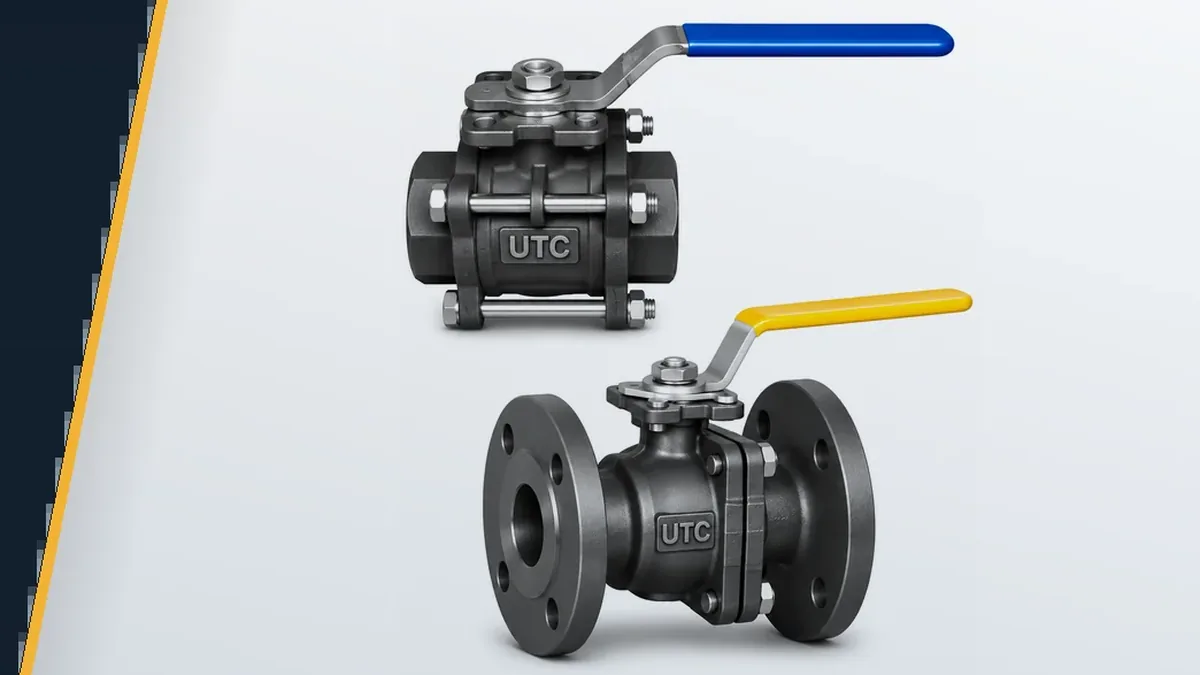
See our forged steel valves page for the gate, globe and ball configurations we supply.
When cast valves are the better choice
- Medium and large lines, where forging would be impractical
- Flanged valves in standard pipe classes
- Bodies with complex internal flow passages
- Projects where economy at larger sizes matters
- Services where cast materials, such as CF8M stainless, are specified
Our gate valves and globe valves pages cover the cast ranges.
Strength, toughness and inspection
Forging usually gives better mechanical properties for the same chemistry, and this is why small high-pressure valves are often forged. For cast bodies, quality is controlled by foundry practice and by examination. Specifications may require radiographic testing for critical castings, magnetic particle or liquid penetrant testing on surfaces, and hydrostatic testing on every valve. If the service is critical, such as high pressure, sour or lethal, state the examination requirements on the data sheet instead of leaving them to the supplier.
The overlap between NPS 2 and NPS 4
In this range, both forged and cast valves exist. The piping specification normally settles the choice by end connection and class. For example, socket-weld or threaded valves are usually forged, while flanged valves in the same sizes are often cast. Do not mix standards in a single line without engineering approval, because dimensions and wall thicknesses differ. Our article on API 600 and API 602 explains how this appears in specifications.
Common misconceptions
- “Forged is always better.” It is better for small compact valves, but it is not practical for large complex bodies.
- “Cast valves are low quality.” A properly controlled and inspected casting is standard practice in most large valves.
- “Forged and cast valves have different pressure ratings.” Ratings follow the material group and class in ASME B16.34, not the manufacturing process alone.
- “Price decides.” Price is only one factor; inspection, delivery and standardisation also matter.
Cost and lead-time considerations
Unit cost depends on size more than on process. In small sizes, forged valves are cost-competitive because they are machined from standard shapes. In larger sizes, castings avoid the cost of large forgings and usually win on price. Lead time follows the same pattern: small forged valves are often kept in stock by stockists, while large cast valves with special trims or materials may need to be made to order. When delivery is critical, state the required date with the enquiry and ask which items are available from stock.
Quality documentation to request
- Material test certificates for body, bonnet and pressure-containing parts
- Heat treatment records where specified
- Hydrostatic shell and seat test reports
- Non-destructive examination reports for castings or forgings when required
- Dimensional and visual inspection reports
- Third-party inspection, if the project requires it
Agree the documents before the order is placed. Different projects need different levels of documentation, and adding requirements later affects price and delivery.
How to decide
Start with the piping specification for the line. If it names forged or cast, follow it. If not, use size and end connection as the first filter, then check pressure class, service severity and project preferences. When in doubt, share your data sheet and ask for a recommendation through our quotation page.
Frequently asked questions
Are forged valves stronger than cast valves?
Forging generally gives better mechanical properties and fewer internal defects, but a correctly specified and inspected cast valve is suitable for its rated pressure and temperature.
Can I use a forged valve in a flanged line?
Yes, forged valves with flanged ends exist, especially in smaller sizes. Check the face-to-face dimension against the piping specification.
Which standard covers small forged gate valves?
API 602 covers compact gate, globe and check valves in NPS 4 and smaller.
Do cast valves need extra inspection?
For critical or high-class services, specifications often require radiography or other examination of castings.
References and further reading
Standards and codes are published by their issuing bodies. Always use the current edition named in your project specification.