API 600 and API 602 are two of the most quoted valve standards in oil, gas and process specifications. They are often mentioned together, which leads to a common misunderstanding: that one is simply a higher grade than the other. In fact they cover different valves.
This article explains what each standard covers, how the two differ, and how they sit alongside other standards that matter in a valve specification. The summaries here are general; always read the current edition of each standard and your project specification.
Why valve standards matter
A valve standard defines design, materials, dimensions, testing and marking. When a purchase order cites a standard, both buyer and supplier know what is expected for wall thickness, trim, face-to-face length, hydrostatic testing and documentation. That makes valves from different suppliers interchangeable in the piping and makes inspection objective.
What API 600 covers
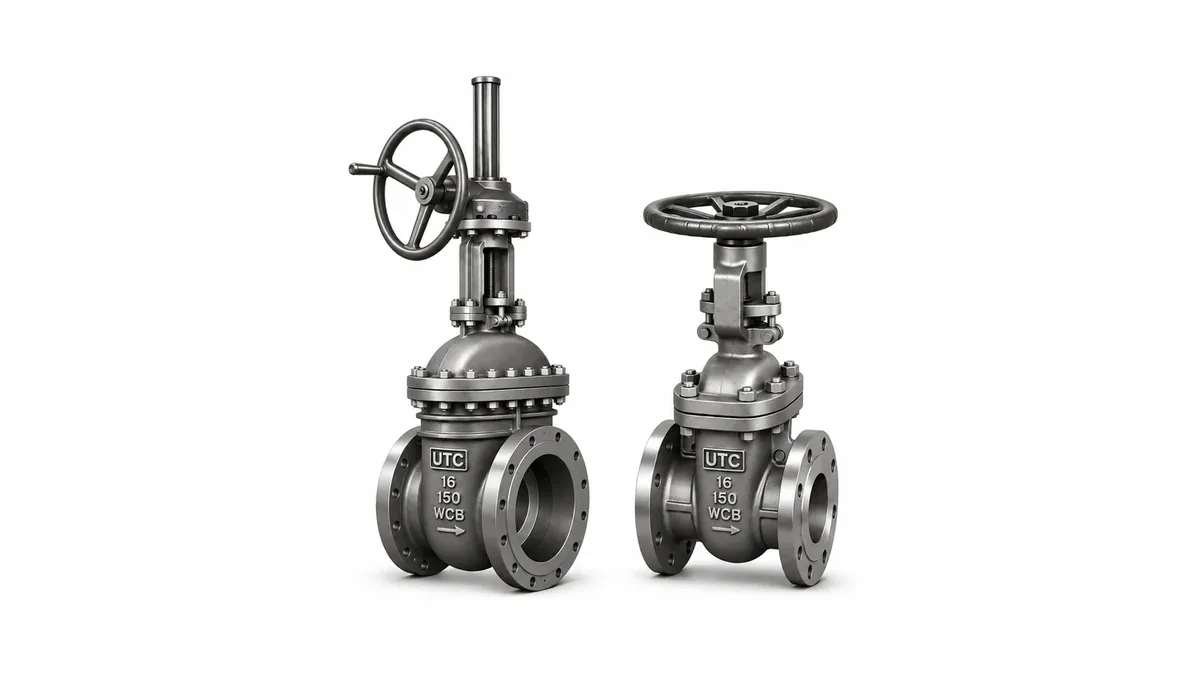
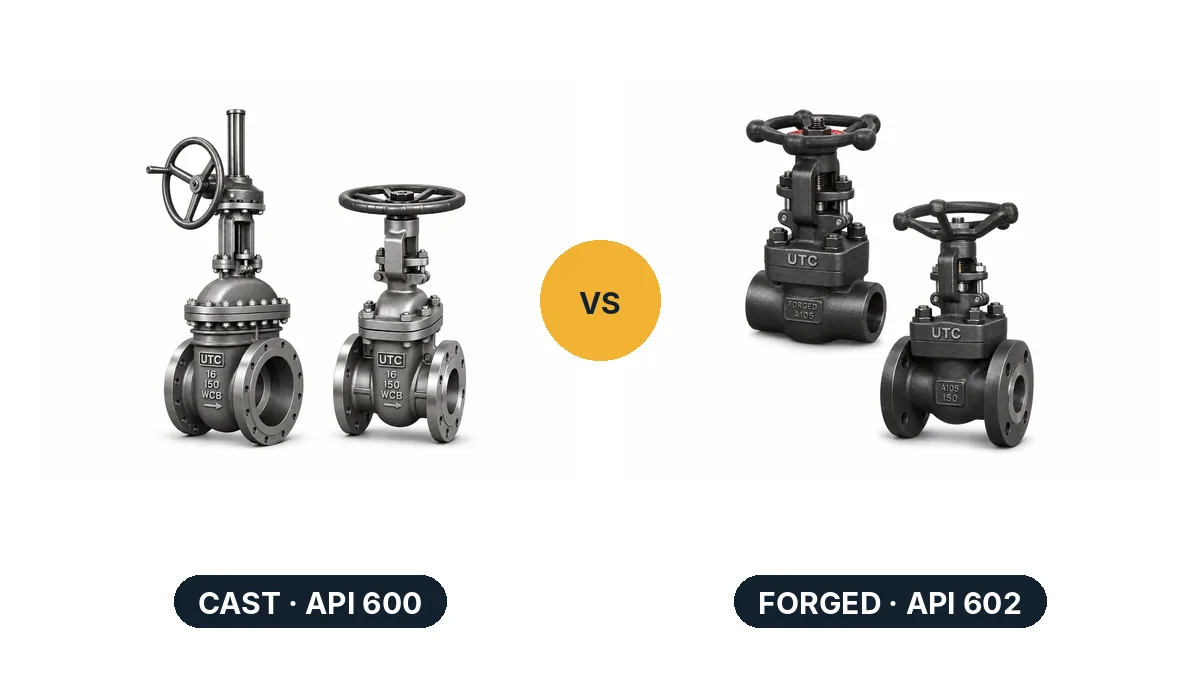
API 600 is the commonly cited standard for steel gate valves with flanged and butt-welding ends and bolted bonnets. It sets requirements for pressure-containing parts, wedge and seat design, stem, bonnet bolting, trim, marking and testing. Valves are typically cast carbon, alloy or stainless steel and are used in refinery, petrochemical and general process lines in larger sizes.
Related standards include API 603 for corrosion-resistant, bolted bonnet gate valves, and API 623 for steel globe valves. The edition matters: different editions have different requirements, so a project should name the edition it requires.
What API 602 covers
API 602 covers gate, globe and check valves in sizes NPS 4 (DN 100) and smaller. These compact steel valves are usually forged and are supplied with threaded, socket-weld, flanged or butt-weld ends depending on size. The standard applies to the pressure classes 150, 300, 600, 800 and 1500 in its current edition. Class 800 is a rating used for small forged valves and is specific to this product family.
Because the valves are small and compact, API 602 is used in instrument lines, drains, vents, sample points and small process lines where strength and compact dimensions matter. See forged steel valves for the range we supply.
API 600 and API 602 compared
| Parameter | API 600 | API 602 |
|---|---|---|
| Valve types | Gate valves | Gate, globe and check valves |
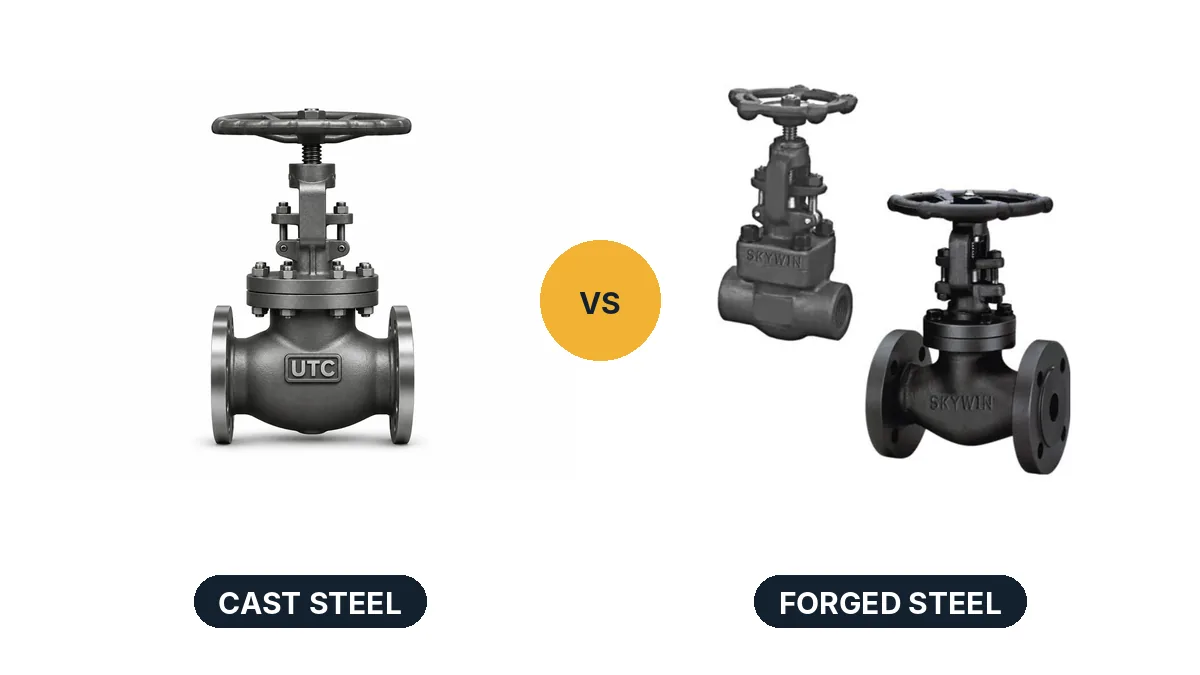
| Typical body construction | Cast | Forged |
| Size range | Larger sizes | NPS 4 and smaller |
| Typical end connections | Flanged, butt-weld | Threaded, socket-weld, flanged, butt-weld |
| Bonnet | Bolted | Bolted, welded or pressure seal depending on design |
| Typical use | Main process and pipeline isolation | Small-bore, instrument and auxiliary lines |
In the size overlap, roughly between NPS 2 and NPS 4, either standard may be used depending on the project’s piping specification. The piping class, not the valve supplier, normally decides which applies.
Other standards that appear with them
| Standard | Subject |
|---|---|
| ASME B16.34 | Pressure–temperature ratings and requirements for flanged, threaded and welding-end valves |
| API 598 | Valve inspection and testing |
| ASME B16.10 | Face-to-face and end-to-end dimensions |
| ASME B16.5 | Pipe flanges and flanged fittings |
| ASME B16.25 | Butt-welding ends |
| ASME B16.11 | Forged fittings, socket-welding and threaded |
| API 623 / BS 1873 | Steel globe valves |
| API 594 | Check valves: flanged, lug, wafer and butt-welding |
| API 6D | Pipeline and piping valves |
How to reference the standards in a specification
- State the standard number and edition year.
- State the pressure class and the material group.
- Specify end connections and facing, such as RF or RTJ.
- Specify trim, for example hard-faced seats.
- List the testing standard and any extra tests.
- List documents required: material test certificates, test reports, dimensional reports.
Avoid writing “API 600 or equivalent” without defining what equivalent means. A clear specification prevents disputes during inspection.
Common misunderstandings
- “API 602 is higher quality than API 600.” Neither is higher; they cover different valves.
- “API 602 is only for forged gate valves.” It covers gate, globe and check valves.
- “API 600 includes every gate valve.” It does not cover small forged valves, and other standards govern pressure seal and corrosion-resistant designs.
- “Standards compliance means the same price.” Material, trim and testing options differ.
Our gate valve selection guide shows where standards fit into the wider selection process.
Documentation to request
For steel valves, buyers commonly request material test certificates for pressure-containing parts, hydrostatic test reports, and dimensional and visual inspection records. Third-party inspection may be requested for critical projects. Ask your supplier what can be provided for each order and agree it in writing before purchase. Our quality and standards page explains what to expect.
Reading a valve description: an illustrative example
A purchase description often packs the standards into one line. For example: “Gate valve, NPS 6, Class 300, flanged RF, cast carbon steel body, hard-faced trim, OS&Y, bolted bonnet, gear operated, API 600, tested to API 598.” Each phrase answers a question the supplier would otherwise have to ask: size, pressure class, end connection, body material, trim, stem design, bonnet type, operator, design standard and test standard.
A similar small-bore line might read: “Globe valve, NPS 1, Class 800, socket-weld ends, forged carbon steel, API 602.” Here the size and class already tell the reader that the valve is a compact forged design, and the standard confirms it. This example is illustrative only and should not be used as a specification without checking the project requirements.
Cast or forged in the overlap range
Between roughly NPS 2 and NPS 4, projects use both cast and forged valves. Flanged connections and larger sizes tend to favour cast valves, while socket-weld and threaded connections tend to favour forged valves. The piping material specification should state the choice. If a data sheet leaves it open, ask the engineer to confirm before the quotation is finalised, since the two valve types have different body dimensions, wall thicknesses and weights. Our article on forged steel vs cast steel valves covers this decision in more detail.
Why the edition matters
Standards are revised from time to time, and a revision can change materials, trim requirements, testing, marking or documentation. A valve built to an earlier edition may not satisfy a project that cites a later one. For that reason, purchase orders should name the edition, and any exceptions should be agreed in writing. If a project cites a standard without an edition, ask the engineer which one applies before the quotation is finalised. This small clarification avoids disagreements at inspection, when it is too late to change the design.
Next step
If you are drafting a valve data sheet and unsure which standard applies, send the size range, pressure class and service to the team through our quotation page.
Frequently asked questions
Is API 602 a forged valve standard?
API 602 covers compact steel gate, globe and check valves in sizes NPS 4 and smaller, which are usually forged.
Which standard applies to a 6-inch gate valve?
A 6-inch gate valve falls outside API 602 and is normally specified to API 600 or a similar standard.
Does API 600 cover pressure seal bonnets?
Editions differ. Confirm the edition cited in your project specification before ordering.
What does Class 800 mean?
It is a rating used for small forged valves in API 602 and relates to threaded and socket-weld ends.
References and further reading
Standards and codes are published by their issuing bodies. Always use the current edition named in your project specification.