Gate valves have been a standard choice for line isolation for a very long time, and for good reason: with the gate fully withdrawn, the bore is straight-through and pressure loss is small. But a gate valve that is wrongly selected can seize, leak through the seat or damage its seating faces within a short time.
This article sets out a practical selection sequence that engineers and procurement teams can follow. It covers service duty, wedge design, bonnet and stem arrangement, materials, pressure class, end connections, operators and standards.
Step 1: Confirm that a gate valve suits the duty
Gate valves are made for fully open or fully closed service. Holding the gate partly open exposes it to high-velocity flow, which can cause vibration and erosion of the seating faces. If the line needs regular throttling, consider a globe valve instead. If the line needs very fast shut-off, a quarter-turn valve may be a better fit.
Gate valves also open and close slowly, which can be an advantage where you want to limit water hammer. Where valves are operated rarely, such as at tank farm or pipeline isolation points, the gate valve remains an economical and reliable option.
Step 2: Choose the wedge design
| Wedge type | How it works | Suited to |
|---|---|---|
| Solid wedge | Single rigid piece that seats between two inclined seats | General service, simple and robust |
| Flexible wedge | Wedge with a machined groove so it can flex slightly | Services with thermal cycling or pipe loads that distort seats |
| Split wedge or parallel slide | Two-piece gate that adjusts to the seats | Specific sealing and thermal conditions, depending on design |
Flexible wedges are widely used in steam and hot services because they reduce the risk of the wedge binding when the body distorts with temperature changes. For general water or oil service, a solid wedge is often adequate.
Step 3: Decide on stem and bonnet arrangement
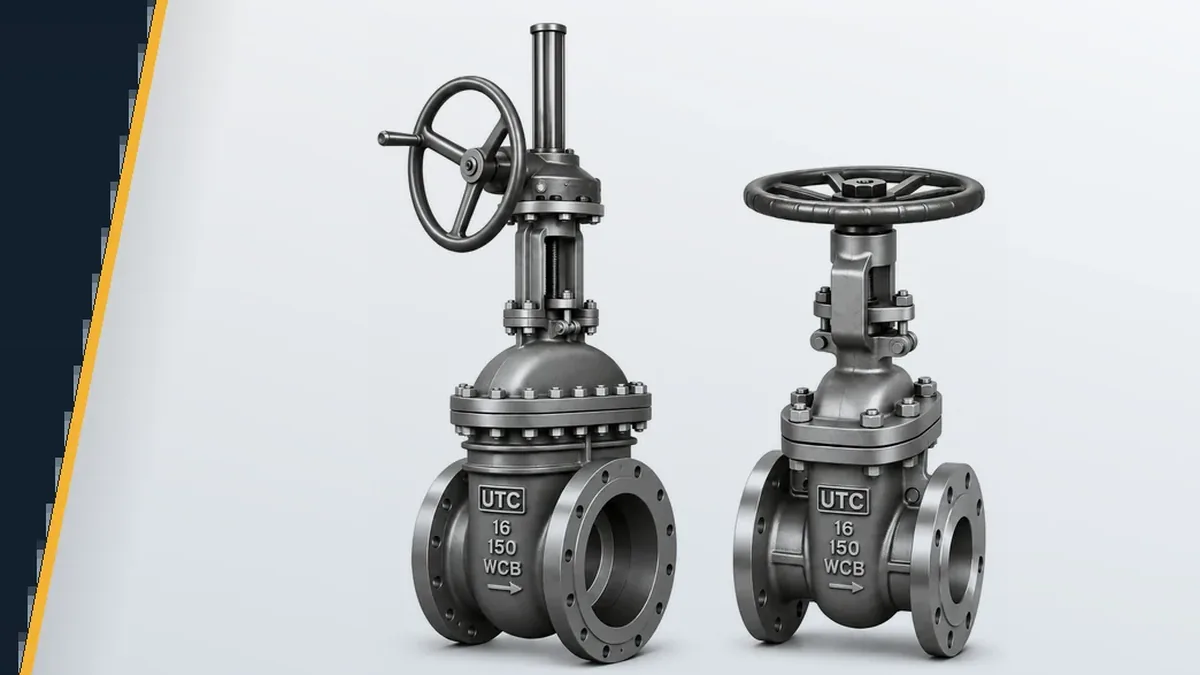
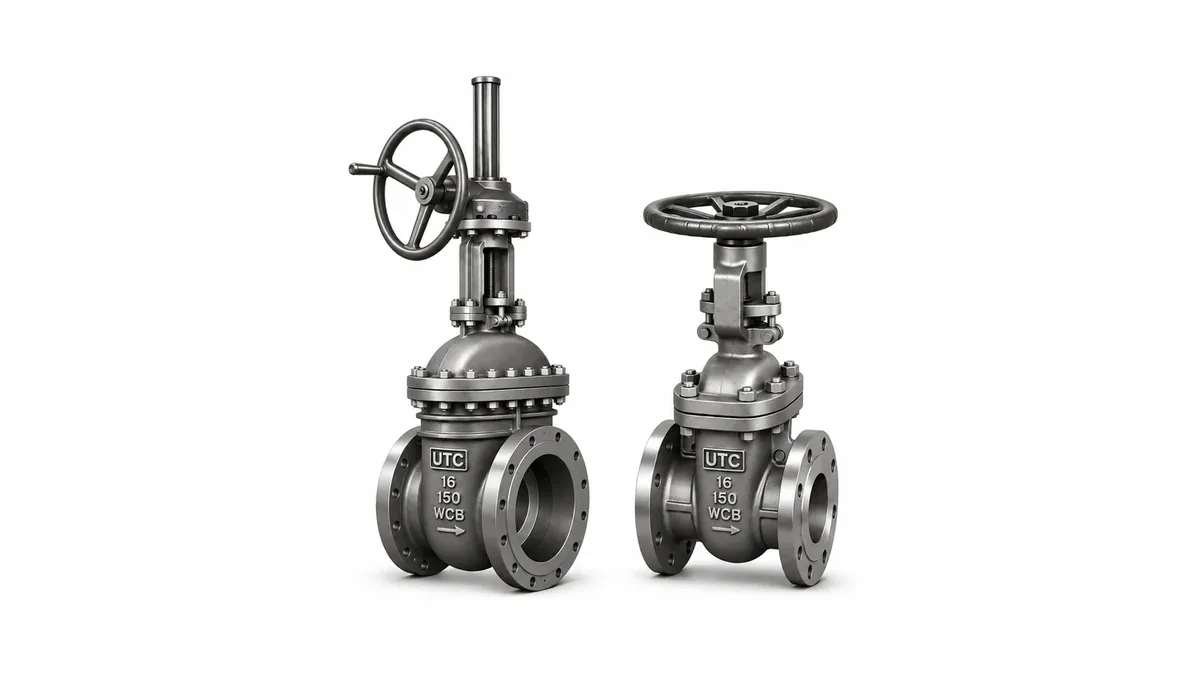
Most industrial gate valves use an outside screw and yoke (OS&Y) arrangement. The stem threads sit outside the pressure boundary, and the rising stem gives a visible indication of valve position. A non-rising stem design is more compact but hides the position and exposes the threads to the process fluid.
Bonnets are normally bolted. For high-pressure, high-temperature services, a pressure seal bonnet uses line pressure to tighten the bonnet seal as pressure rises. Our article on pressure seal valves explains when this design is chosen. A back-seat feature may allow packing replacement under defined conditions, but only if the design permits it; follow the manufacturer’s guidance.
Step 4: Select body and trim materials
Material choice follows the fluid and temperature. Cast carbon steel (ASTM A216 WCB) is the most common choice for general hydrocarbon, steam and water services. Low-temperature carbon steel (A352 LCB or LCC) is used where cold service is expected. Alloy steels such as A217 WC6 or WC9 are used for higher-temperature steam. Stainless grades such as A351 CF8M are chosen for corrosive media.
Trim, meaning the stem, seat rings and wedge facing, is chosen separately. Hard-faced trims are used where wear or erosion is expected. Our article on carbon steel vs stainless steel valves covers the main material trade-offs.
Step 5: Specify the pressure class and end connections
Pressure class (150, 300, 600, 900 and so on) must be chosen against the design pressure and temperature, not the pressure alone, because allowable pressure falls as temperature rises. Read our guide to pressure classes 150, 300, 600 and 900 before finalising the class.
End connections are normally flanged (raised face or ring-type joint) or butt-weld. Small sizes may use socket-weld or threaded ends. The end connection must match the mating pipe or flange standard in the piping specification.
Step 6: Plan the operator
Handwheels are normal on smaller sizes. Larger and higher-class valves usually need a gear operator to keep operating effort reasonable. Where valves must be operated remotely or on a signal, electric or pneumatic actuators are fitted, and the valve design must be suitable for actuator mounting and the thrust involved.
- Confirm the torque and thrust the operator must supply.
- Check handwheel clearance and gear operator orientation on the pipe rack.
- Specify stem protection where the stem is exposed to dust or weather.
Step 7: Follow the right standards
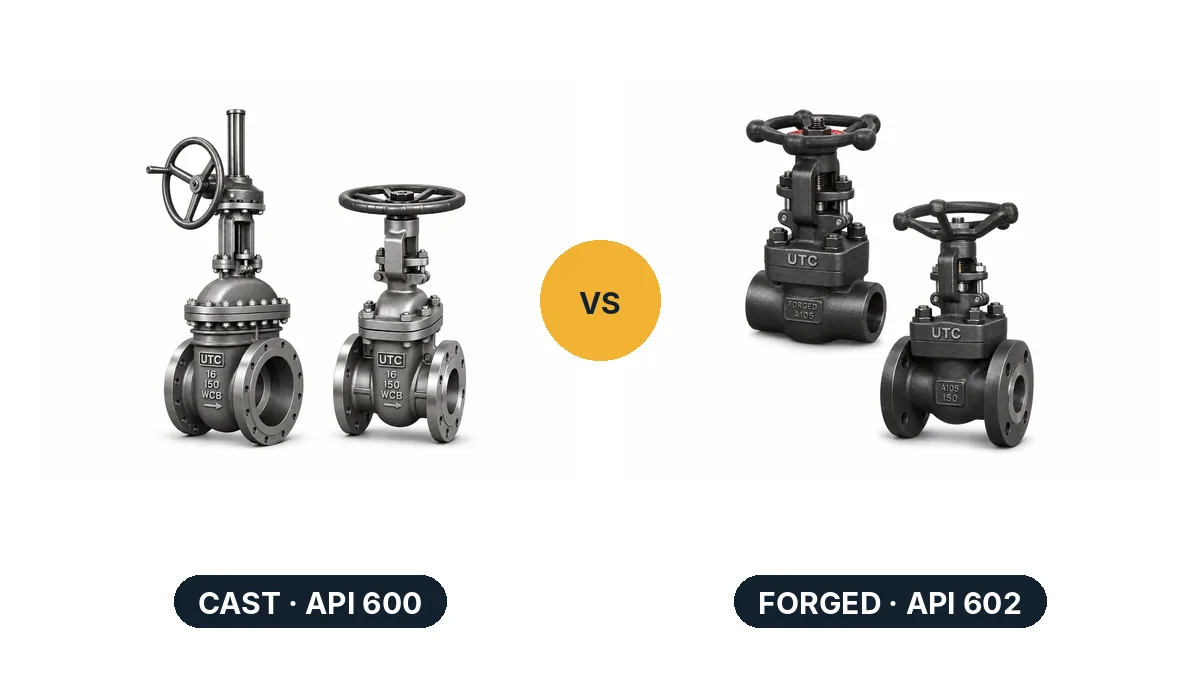
API 600 is the commonly referenced design standard for bolted-bonnet steel gate valves with flanged and butt-weld ends, and API 602 covers compact gate, globe and check valves in sizes NPS 4 and smaller. Pressure–temperature ratings follow ASME B16.34 and testing normally follows API 598. Our article on API 600 and API 602 explains where each applies. Always check which edition and which additional requirements your project specification calls for.
Typical applications
- Pipeline and manifold isolation in oil and gas
- Tank farm inlet and outlet lines
- Steam, condensate and boiler auxiliary lines
- Cooling water and fire water headers
- Process isolation in refineries and chemical plants
Browse our gate valves range, or check how gate valves fit into oil and gas applications.
Common selection mistakes to avoid
- Choosing by size and price only. Two gate valves of the same size and class can use very different materials, trims and wedge designs. Compare the full data sheet.
- Ignoring temperature. A valve that is acceptable at ambient temperature may be outside its rating at operating temperature. Check the pressure–temperature rating for the actual material group.
- Using a gate valve to regulate flow. This is the most common cause of premature seat damage.
- Forgetting actuator or gear requirements. Adding an operator late can change the valve’s dimensions and the pipe support design.
- Overlooking the specification edition. A project may call for a specific edition of API 600 or additional requirements; confirm them before ordering.
Most of these problems are avoided by completing a data sheet before the enquiry is issued.
Installation and handling tips
Store valves with the gate slightly open and the ends protected, so that seating faces are not damaged and debris does not enter the body. Flush the line before commissioning, because welding debris is a common cause of seat scoring. Support the valve and its operator properly, since large gate valves with gear boxes can be heavy and can add bending load to the pipe. During commissioning, cycle the valve once to check smooth operation, then leave it in the position required by the commissioning procedure.
Information to include in your enquiry
To receive an accurate quotation, send the size, pressure class, body and trim material, wedge type, end connections, operator, service fluid, design pressure and temperature, and the project specification. You can submit these on the Request a Quote page.
Frequently asked questions
Can I use a gate valve for throttling?
No. Gate valves are intended to be fully open or fully closed. Throttling can damage the seating faces and cause vibration.
What does OS&Y mean?
Outside screw and yoke. The stem threads sit outside the valve body, and the rising stem shows whether the valve is open or closed.
When is a flexible wedge preferred?
A flexible wedge is often preferred in services with temperature changes, such as steam, because it can accommodate slight seat distortion.
Which standard applies to a steel gate valve?
API 600 is commonly specified for bolted-bonnet steel gate valves with flanged and butt-weld ends. API 602 applies to compact valves in NPS 4 and smaller.
References and further reading
Standards and codes are published by their issuing bodies. Always use the current edition named in your project specification.